



A few weeks ago, banks, insurers and travel stocks suddenly started selling off.
The S&P 500 financial sector fell nearly 2% in one session. Booking Holdings dropped 2.6%, while the broader market was roughly flat.
The catalyst wasn’t a recession.
It wasn’t the Fed.
It was an AI agent called Muse.
Meta had launched Muse only two weeks earlier.
Meta shares then surged more than 20%, adding over $200 billion in market value, while investors started questioning which businesses Muse could disrupt.
That raises a much bigger question:
What happens when AI stops giving consumers advice and starts doing the work for them?
Muse Isn't Another Chatbot
The easiest way to understand Muse is to compare it with the AI most of us use today.
Ask a chatbot:
“Find me a good hotel in Miami under $300 a night.”
It can research options and give you recommendations.
Muse is designed to go further.
Chatbots: Ask → Answer
Muse: Ask → Research → Compare → Act
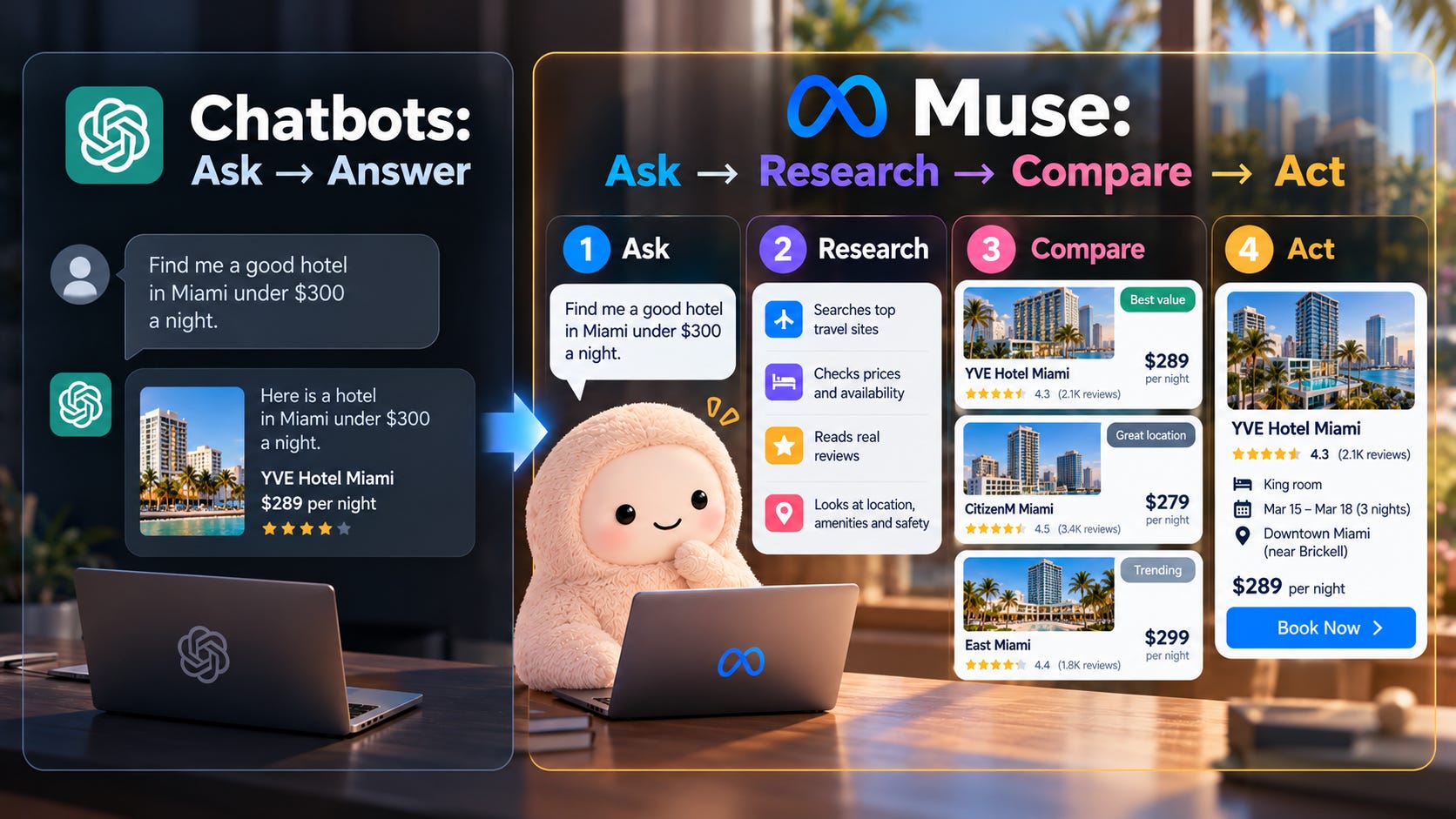
Meta says Muse can browse the web, fill out forms, send emails, shop, make reservations and book travel on a user's behalf.
So instead of giving you a list of hotels, the goal is for Muse to help find the hotel, compare the options and book it.
That sounds like a small difference.
It isn’t.
Generative AI creates information. Agentic AI takes action.
And taking action requires more than a good AI model.
It requires websites, software, payments, data and infrastructure.
That’s where the Muse story gets much bigger.
5 Million Downloads in 22 Days
Muse launched on September 8.
It took just 22 days to reach 5 million downloads, per Sensor Tower.
For comparison:
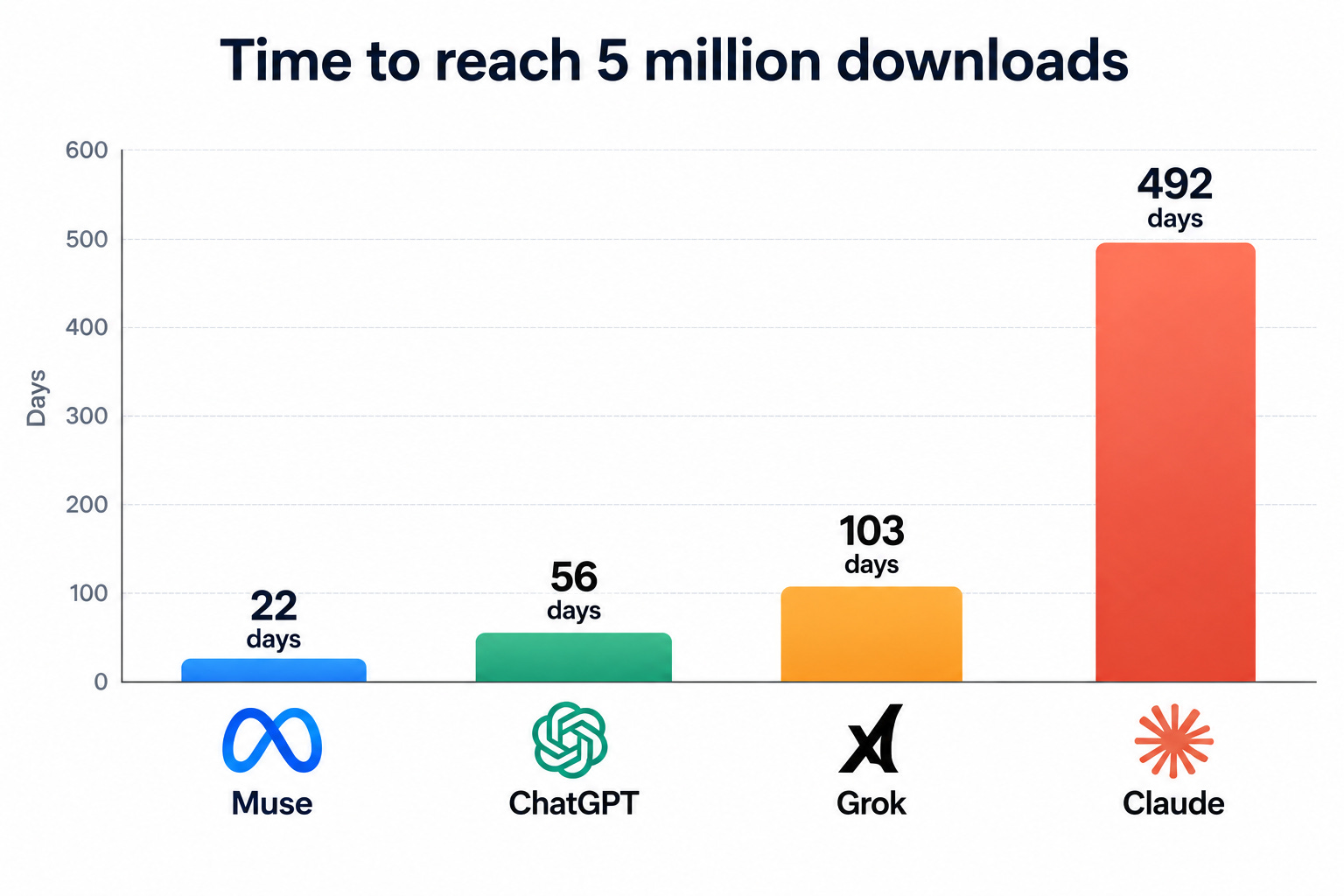
Muse reached the milestone faster than any of them, according to Forbes.
But downloads are only part of the story.
Meta is already pushing Muse beyond a personal assistant.
Shopping → Payments → Small Business → Smart Glasses
The bigger question is no longer whether people will try Muse.
It’s how much of their daily life they’re willing to hand over to it.
Muse Could Kill Consumer Inertia
Many businesses benefit from one simple fact:
Switching takes effort.
Your insurance gets more expensive. Your internet bill goes up. A cheaper hotel is available.
But comparing alternatives takes time.
So you stay.
Muse changes that.
Today: Price goes up → Switching takes effort → Customer stays
With Muse: Price goes up → Muse compares → Better deal → Customer switches
Muse could automate consumer bargaining power.
That could matter for industries like insurance, banking, telecom and travel where customer inertia has real economic value.
Meta Is Building a Muse Ecosystem
Muse becomes much more useful when it can connect to the services people already use.
Meta is already building those connections.
Shopping. Payments. Work. Finance. Marketing.
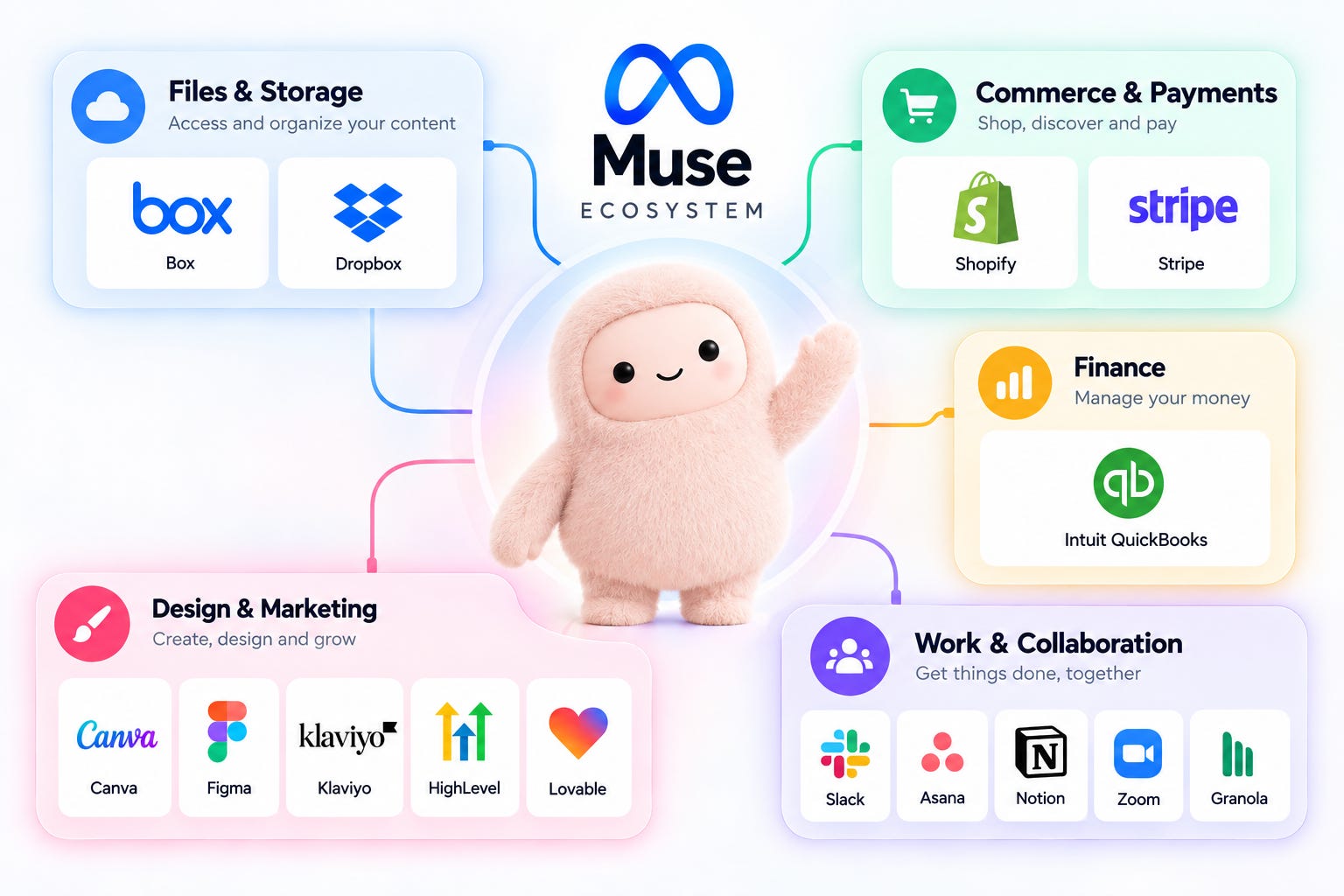
These integrations turn Muse from an AI that knows things into an AI that can do things.
More Integrations → More Tasks → More Usage
That’s the real power of agentic AI:
The model provides the intelligence. The integrations give it the ability to act.
What Happens When the Agent Becomes the Customer?
For decades, companies have competed for your attention.
Ads.
Search rankings.
Influencers.
Beautiful websites.
But what happens when Muse does the shopping for you?
The agent may care more about:
Price. Availability. Reviews. Shipping. Returns.
Businesses aren’t just competing for your click anymore.
They may increasingly compete for the AI representing you
The next internet may compete for the agent’s recommendation, not your click.
One Muse Request Could Create a Lot of AI Demand
Ask Muse:
“Find me a good hotel in Miami under $300 a night.”
To you, that’s one request.
To Muse, it could mean:
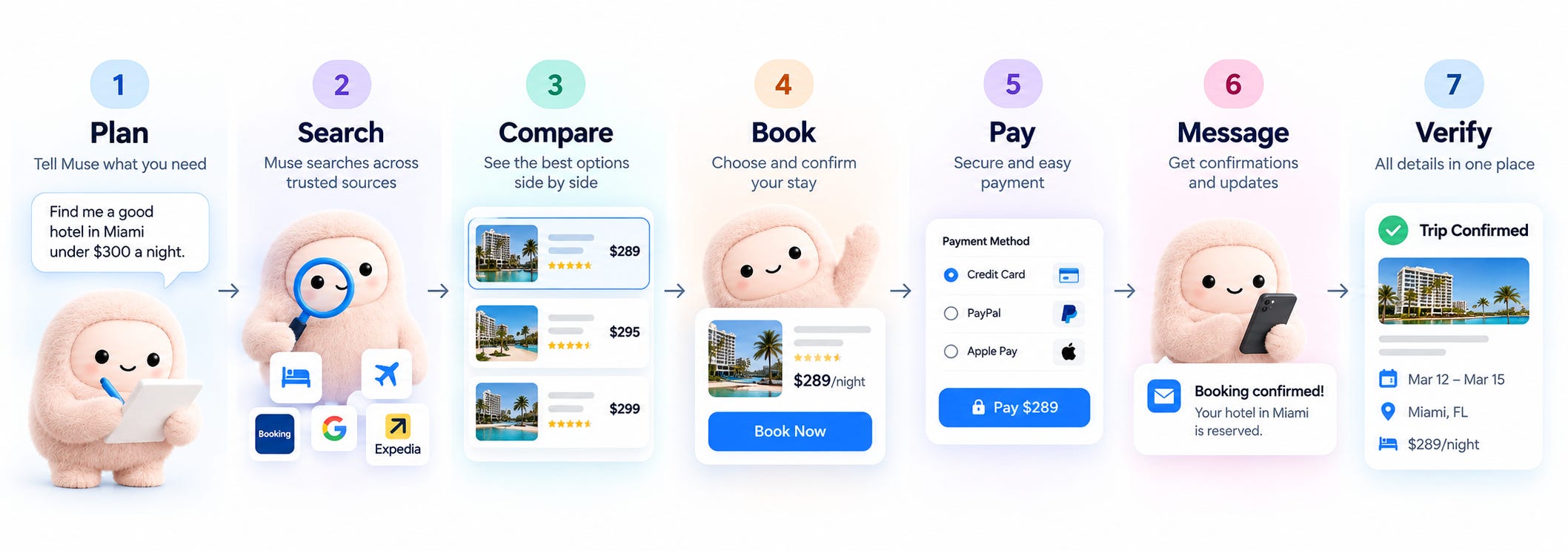
Each step can require more AI inference and data movement.
Scale that across millions of users:
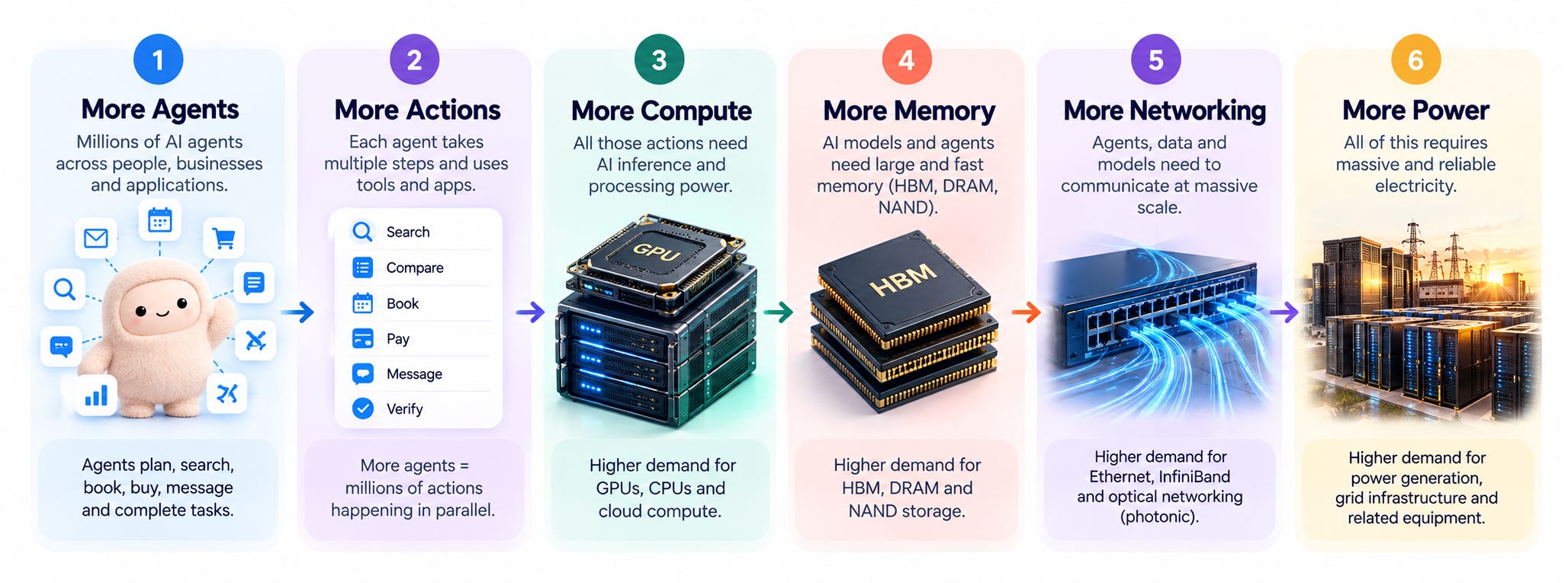
This is where Muse becomes much bigger than a Meta story.
Every action an AI agent takes creates demand somewhere underneath it.
3 Industries That Could Boom From AI Agents
If AI agents move from answering questions to doing work, the opportunity goes far beyond Meta.
Three industries stand out.